Future-Proofing Your Charity: Strategy, Capacity, and the Smart Digital Shift
Date: 30.04.26 Host: Oliver Wyman
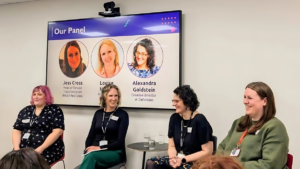
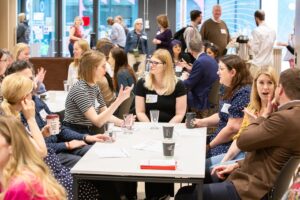
We brought together 70 passionate leaders from across the sector gathered to network, share learning, and problem-solve together.
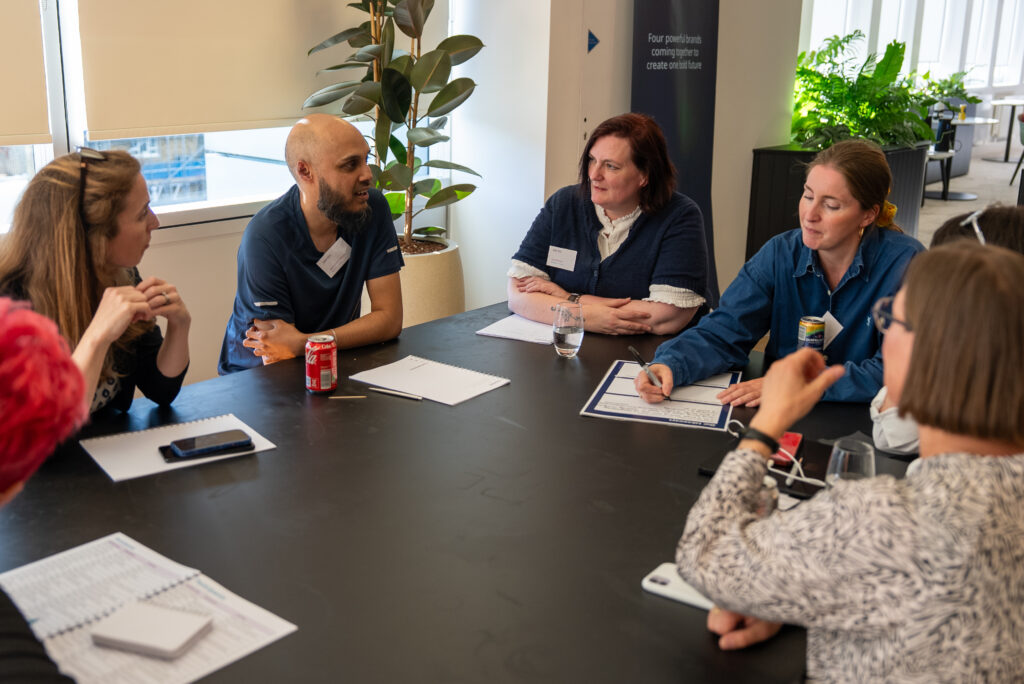
Hosted in a vibrant, sun-filled space at Oliver Wyman, the event focused on connection, ingenuity, and the “human” side of strategic growth.
Core Themes: Moving Forward with Purpose
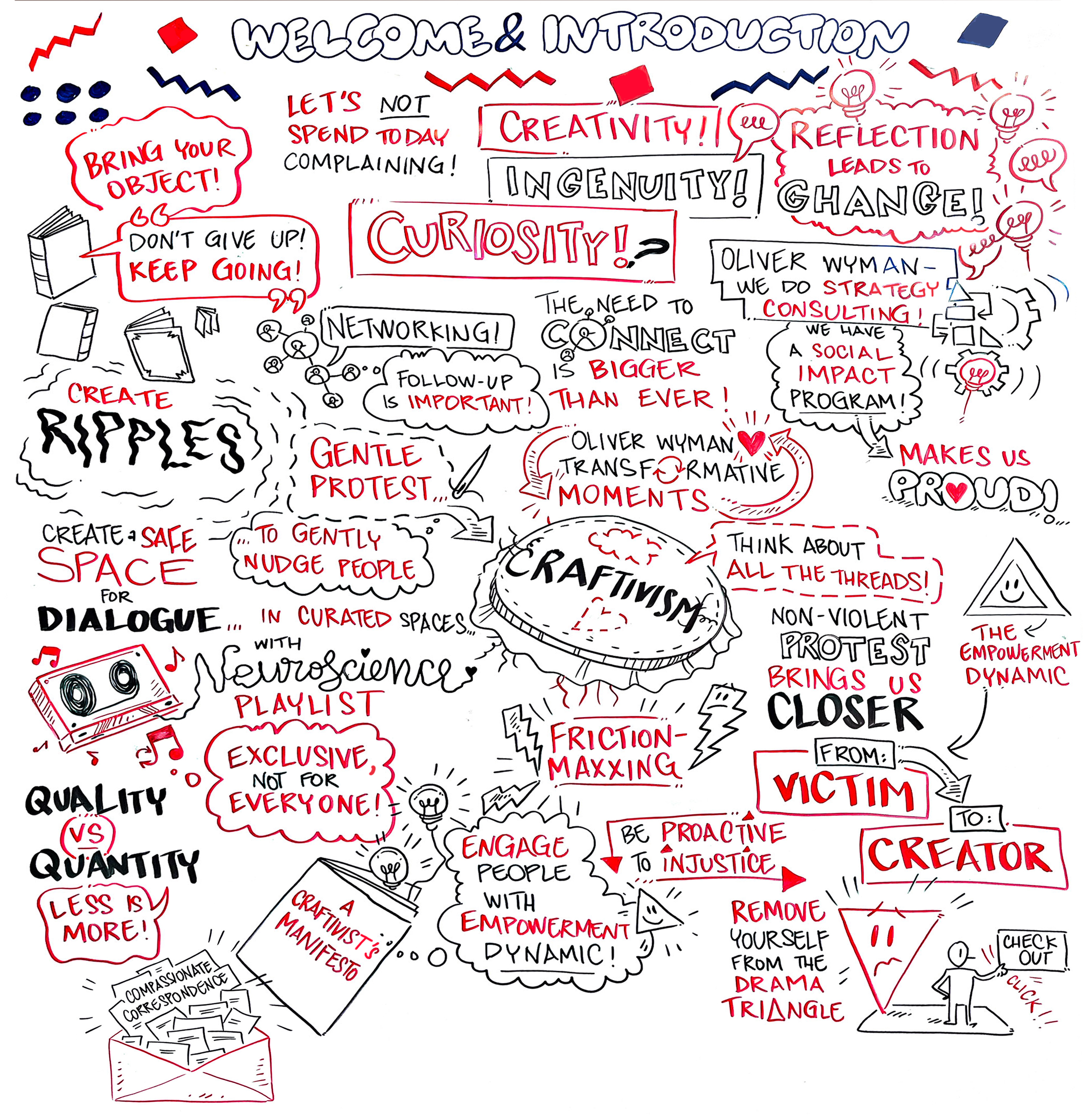
The day opened with a challenge to attendees to bring an object reflecting their potential. From books on evolution to symbols of the heart, the message was clear: leading and thriving means looking after the future of the sector – our people.
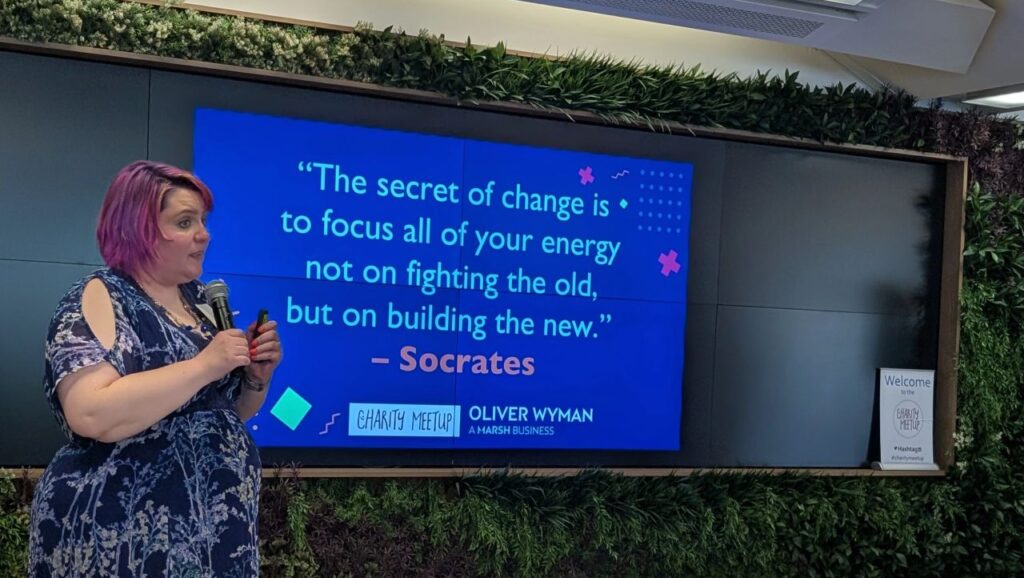
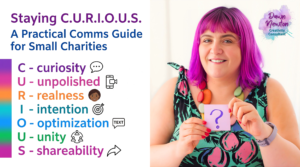
Dawn Newton set the tone by urging the room to embrace curiosity and creativity. Quoting Socrates, she reminded us:
“The secret of change is to focus all of your energy not on fighting the old, but on building the new.”
Strategic Partnerships: Oliver Wyman
Nikki shared insights into how Oliver Wyman approaches the sector through their Social Impact Fund.
The Goal: Aligning with the UN and global organisations to provide 1-2% of their activities to charities.
The Value: Moving beyond short-term fixes toward multi-year transformative programmes (tech, data, and fundraising) that allow junior consultants and charity teams to grow together.
Craftivism & The Empowerment Dynamic
Sarah Corbett introduced the room to Craftivism, a considered, compassionate approach to campaigning known as “gentle protest.”
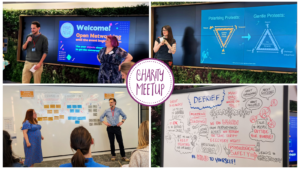
A central pillar of this approach is moving away from the “Drama Triangle” (where we often fall into roles of Victim, Persecutor, or Rescuer) and adopting The Empowerment Dynamic (TED).
By reframing our roles as Creators, Coaches, and Challengers, we can engage with the public and decision-makers more effectively. Sarah also discussed:
Friction-maxxing: A 2026 lifestyle trend of adding intentional discomfort (like the slow process of crafting) to routines to encourage deep engagement over mindless reaction.
Quality over Quantity: It’s okay to “be boring” by repeating a core message until it sticks. Strategic exclusion can actually make a campaign feel more special to its target audience.
The Collaborative Recap: Leading Through Transformation
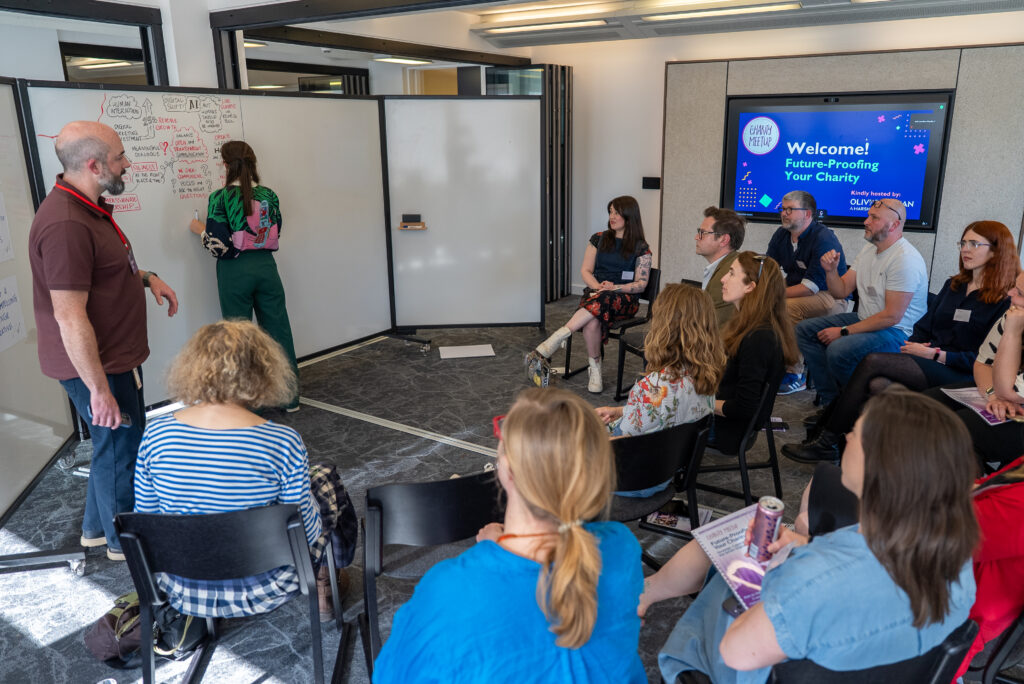
To navigate the complexities of the current landscape, we entered four facilitated “chatrooms”. These are dynamic spaces designed to deconstruct the biggest challenges facing our sector.
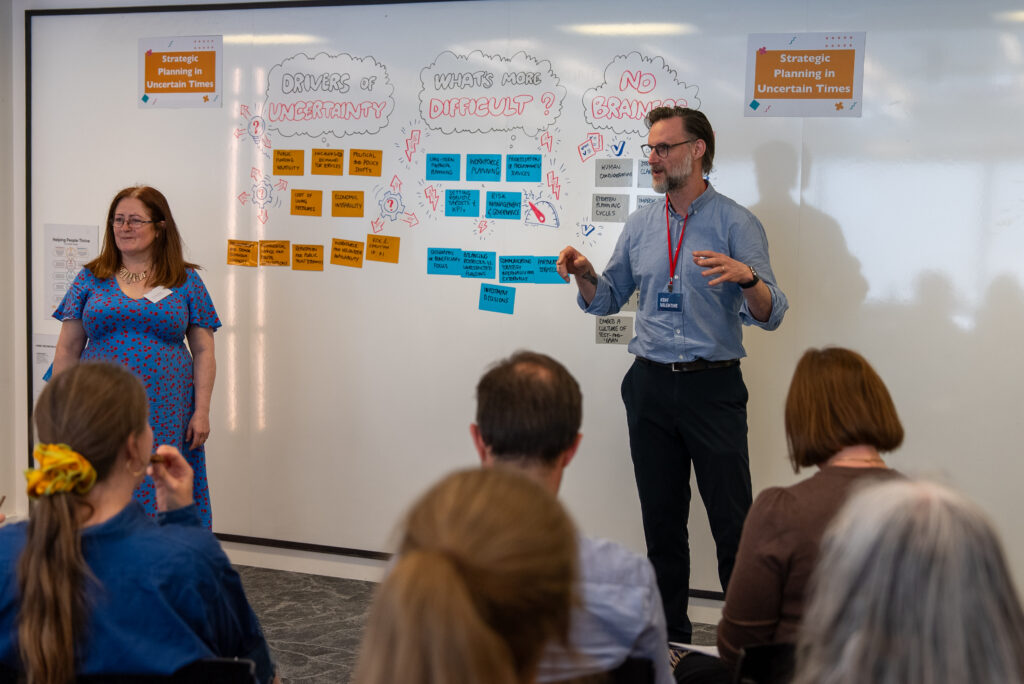
In an era of “permanent volatility,” we identified that strategy must become fluid and responsive rather than rigid.
Drivers of Uncertainty: We are navigating a perfect storm of Political & Policy shifts, Economic instability (cost-of-living and funding volatility), and the Rise of AI. Socially, we noted a growing “disconnect from nature” and rapid changes in donor behaviour.
Internal Struggles:Visibility is our greatest challenge—communicating strategy when the ground is shifting. Balancing restricted vs. unrestricted funding and workforce availability remain major operational hurdles.
The “No-Brainer” Solutions: Resilience requires shortening planning cycles and moving toward “lightweight” scenario planning. We must embed a “test-and-learn” culture and give ourselves the radical “permission to say no” to projects that dilute our core vision.
2. The Smart Digital Shift (AI Transformation)
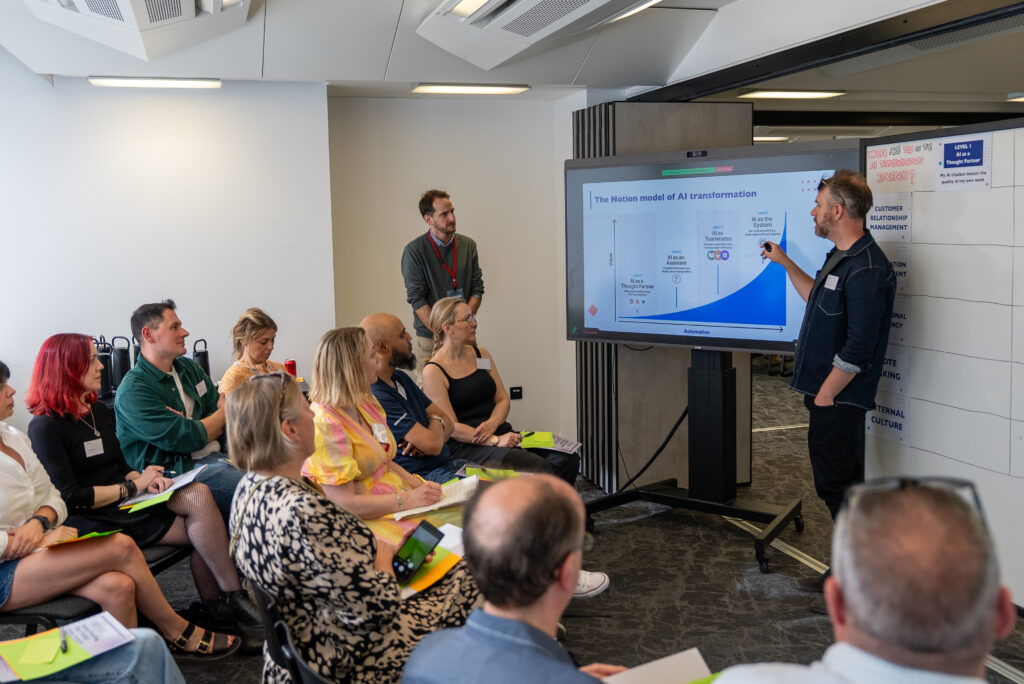
We mapped our journey across a four-level maturity framework, identifying the leap from personal tools to organisational systems.
The Transformation Journey:
Level 1 (Thought Partner): Using AI for research, drafting emails, or summarising CRM interactions.
Level 2 (Assistant): Personalising communications and using tools like Claude to check code standards.
Level 3 (Teammate): Moving into proactive triage—AI acting as a “first responder” for supporter leads or tech support before humans step in.
Level 4 (The System): Pioneers exploring AI that records calls, analyses data, and autonomously writes initial project proposals.
Barriers to Adoption: Significant concerns remain regarding Accuracy (“real howlers” in AI facts), the manual steps still required for integration, and the Ethical/Legal regulations specific to the charity sector.
3. Collaboration and Cooperation
This session focused on the foundations of working together and moving up the “Ladder of Engagement.”
The Ladder of Engagement: We defined the spectrum from Coercion (Doing “to”) at the bottom, through Consultation (Doing “for”), to the pinnacle of Co-production (Doing “with” in an equal, reciprocal partnership).
Working Agreements: We discussed the need for formal Memorandums of Understanding (MoUs) and a “framework of process”—a manual for how to communicate, argue effectively, and stay aligned when things go wrong.
Core Values: Collaboration starts with “inner work.” Knowing your own strengths and ensuring your values are up-to-date is the prerequisite for a healthy partnership.
4. Activating Change
This group focused on the human side of transition, swapping “corporate speak” for genuine connection and compassion.
The Empowerment Dynamic: A recurring breakthrough was the need to escape the Drama Triangle (Victim/Rescuer/Persecutor) and pivot toward The Empowerment Dynamic, transforming those roles into the Creator, the Coach, and the Challenger.
Authentic Leadership: We called for “No dressing up in corporate language.” Authenticity, vulnerability, and “strategic silliness” are the tools required to humanise the process and build trust.
Psychological Safety: Curating spaces that prioritise hope and positivity over “trauma dumping.” By using live feedback loops and open dialogue, we empower people to participate in change rather than just receive it.
Five Meta-Themes for the Sector
Across all four rooms, these core transitions defined our collective compass for 2026:
Intentionality over Urgency: Trading “frantic efficiency” for “gentle activism.”
The Empowerment Shift: Moving from “Doing To” (top-down) to “Doing With” (co-production).
Human-Centric Digital: Using AI as a “Thought Partner” to reclaim time for deep human connection.
Radical Cooperation: Trading competition for a “Jigsaw” approach—sharing resources, learning, and advocacy.
Agile Resilience: Embracing curiosity and “test-and-learn” cycles over rigid long-term plans.
The Bottom Line: Our future leadership is technologically enabled but human-led.
We are trading corporate scripts for compassionate leadership and empowered collaboration.
Reflections & “Aha!” Moments
The event transitioned into interactive reflection sessions focused on three questions:
What was your biggest “aha!” moment?
What will you do differently going forward?
How can charity leaders work better together?
Key Highlights from the Discussion:
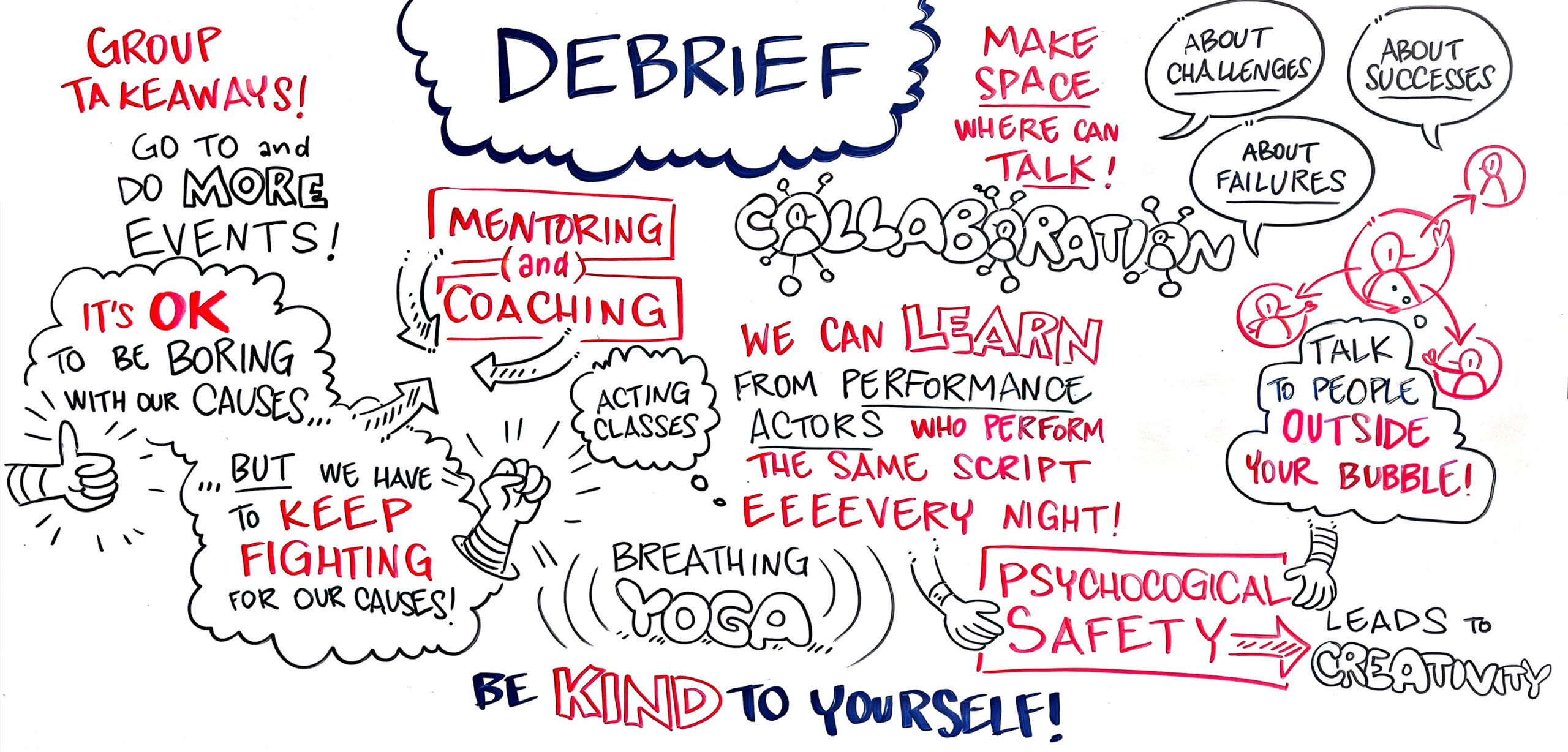
Psychological Safety (SCARF): Leaders at all levels must ensure their teams feel safe enough to be creative.
The 3.5% Rule: Engaging just 3.5% of a population has historically never failed to achieve change.
Human Connection: David (Pico) noted that face-to-face fundraising outperformed internet marketing by 20%, proving that personal engagement remains king.
Thank you!
Huge thank you to everyone who made the London Charity Meetup so full of energy and lively discussion.
The event was wonderful because David Cobb and the OW team worked with us to deliver every single aspect of the event, including the music!
Nathan Miller thank you for capturing the spirit of the event in your wonderful photos.
Live Scribes
Thanks to Iulia Zolotcov for bringing the dream of live scribing at the Charity Meetup to life.
Testimonials
"The energy was genuinely electric from the moment you walked in! What struck me most, though, was something harder to plan for: the generosity of the people in the room. Attendees openly shared insights, strategies, and hard-won lessons - with zero sense of competition. In a sector that often operates in silos, it was refreshing to see people genuinely invest in each other's success."
"An afternoon of learning, connecting, and laughing with like-minded people was exactly what the soul needed."
"The whole day was amazing, and it was so reinvigorating and rewarding to have attended an in-person event designed to bring people together and create sessions where networking opportunities felt natural and not forced."
Subscribe to our newsletter to get access to the resources and full session discussions.